Mouldings – reducers

Reducer moldings are essential for creating a smooth and visually appealing transition between floors of different heights. They help bridge the gap between various flooring types and elevations, such as from hardwood to carpet or tile. Here’s a more detailed look at reducer moldings and tips for their installation:
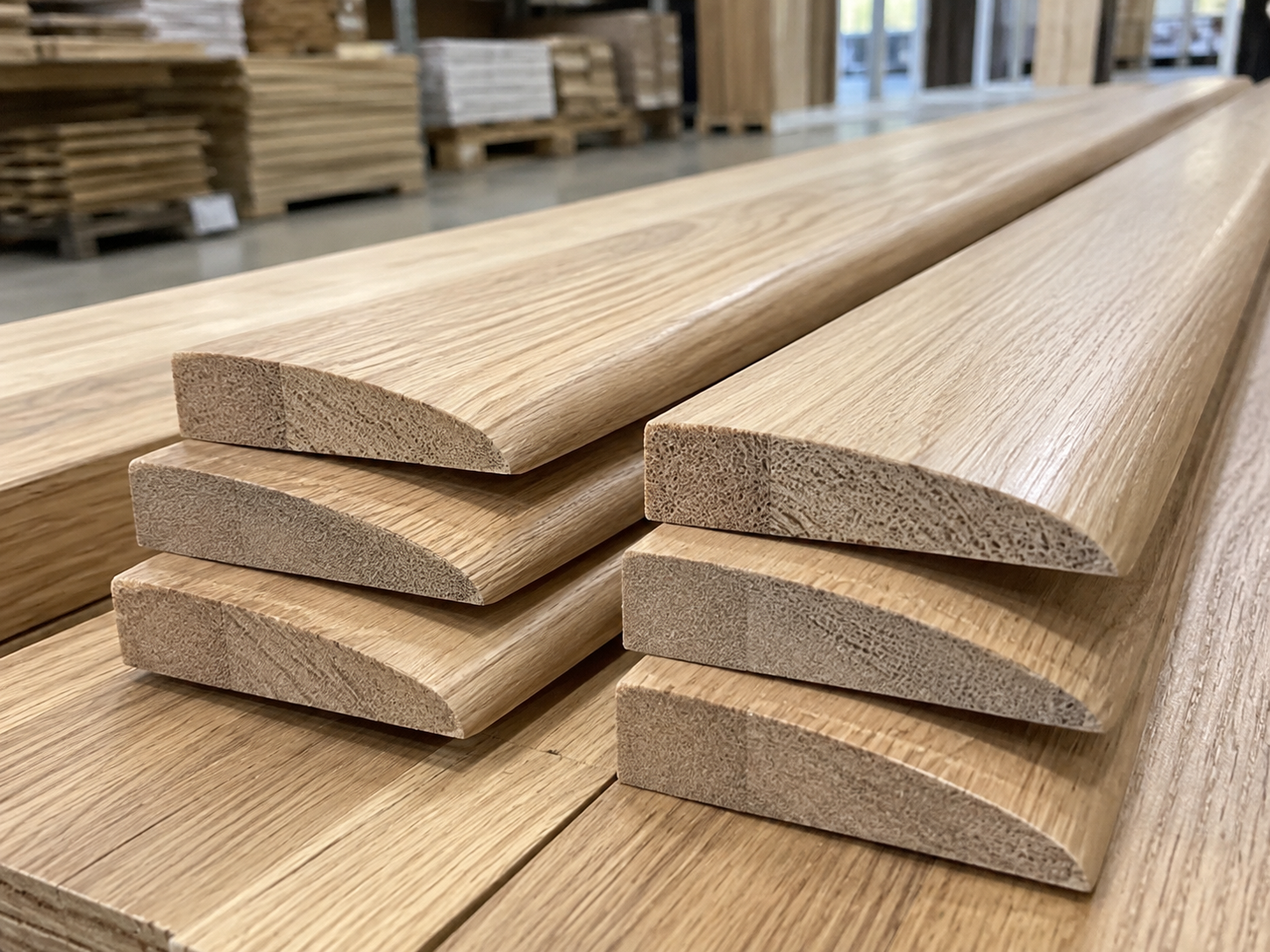
Stacked light oak reducer mouldings with tapered profiles in a flooring store.

Types of Reducer Molding:

Flush Mount Reducer:​

  • Purpose: Used for floors that are glued or nailed down. It provides a seamless transition by leveling the height difference between the two flooring surfaces.
  • Installation: Typically involves applying glue to the edge of the molding and ensuring it sits flush with the floor.

Overlap Reducer:​

  • Purpose: Ideal for floating floors, like laminate or engineered wood. It accommodates the natural expansion and contraction of the floating floor.
  • Installation: It overlaps the edge of the flooring, allowing movement without damaging the transition.

Installation Tips:

Preparation:​

  • Clean the Area: Ensure the transition area is clean and free of debris.
  • Measure and Cut: Accurately measure and cut the reducer molding to fit the transition area.

Applying Glue:​

  • Glue Application: Apply a suitable adhesive to the front edge of the molding.
  • Positioning: Seat the molding in place, making sure it aligns properly and creates a flush surface.

Securing the Molding:​

  • Use Tape: Tape the molding down to hold it in place while the glue sets. This prevents shifting and ensures a secure bond.
  • Pre-Drill if Nailing: If you’re nailing the molding into a wood subfloor, pre-drill holes to avoid splitting the wood.

Final Adjustments:​

  • Check Alignment: Ensure the molding is level and properly aligned with both flooring surfaces.
  • Allow to Set: Let the glue cure fully before walking on the area or moving any furniture.

Distinguishing Reducer Molding from T-Molding:

  • Reducer Molding: Designed to transition between floors of different heights.
  • T-Molding: Used when transitioning between floors of the same height, such as two types of the same flooring or floors with the same elevation.

By following these tips, you can achieve a clean, professional-looking transition between different flooring types, enhancing both the functionality and aesthetic appeal of your space.

Light oak reducer moulding connecting a higher hardwood floor to a lower tile floor at a doorway.

Your Source for all your moulding needs in North Carolina

From our convenient location in Clemmons, NC, Floor Plus More is dedicated to providing you with the highest quality flooring products available at an affordable price. We make it easy to get the products you need, and we even offer delivery to ensure your project stays on track.

Whether you’re just beginning to explore your options or ready to dive into your flooring project, our team is here to help. Contact us today to learn more about our flooring selection and start planning your next home improvement project with the experts at Floor Plus More.

Let’s design together

Floor Plus More is a one stop shop of quality options to professionally finish hardwood floors. We sell a wide variety of quality pre-finished and unfinished hardwood flooring, luxury vinyl flooring, and engineered wood flooring to both homeowners and flooring contractors.

Factory Direct

We bring our amazing products straight from the factory to you. We carry a large amount of flooring products and are your one stop shop for all your flooring needs.

Location

Contact

Get Quote

Name